Welcome to Woodinville Family Preschool
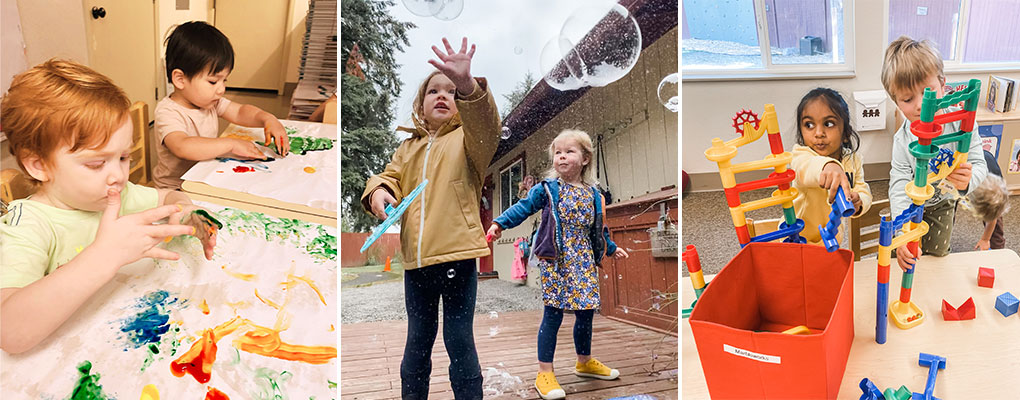
At Woodinville Family Preschool, our mission is to serve as a place where developmentally appropriate education for every family is the heart of a respectful, diverse community. We strive to educate and support families in a way that is meaningful to both caregivers and children, while respecting who they are as individuals and where they are in their parenting journey and in their developmental growth. We are both a parenting education program and a cooperative preschool, with classes designed to engage children from birth through Pre-K. Woodinville Family Preschool is one of several cooperative preschools affiliated with the Shoreline Community College Parenting Education Program. We have met the rigorous accreditation standards of the National Association for the Education of Young Children (NAEYC) since 1995 and the certification standards of Nature Explore since 2011.
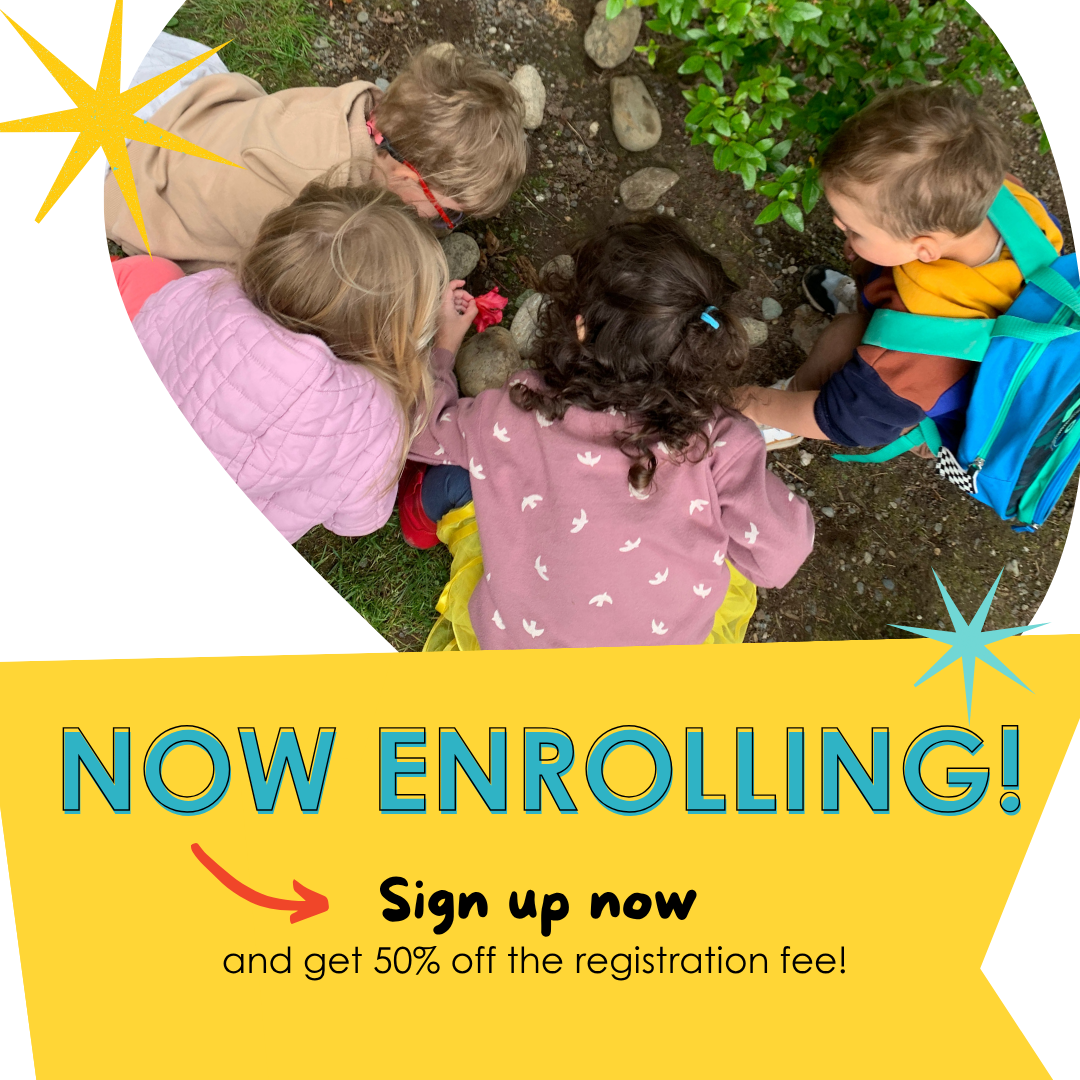
Registration for 2026-27 School Year
Health Policy
Woodinville Family Preschool is committed to the health and safety of its staff, students and their families.
Recent Blog Posts
Our School
Founded in 1968, Woodinville Family Preschool is a cooperative venture offering early learning experiences for infants, toddlers, and preschoolers, as well as education and support for their caregivers.
Location: 23713 49th Ave SE, Woodinville, WA 98072
Telephone: (425) 481-9707
How to Join Us
If you are interested in joining us for the upcoming school year, we ask that you learn more about our program by attending our Open House or watching our virtual open house here:
“WFP was an anchor and inspiration for our young family. The insights and tools gained through the WFP curriculum positively contributed to how my husband and I raised our children. I often recommend to young parents the books which I learned about at preschool.“
-Karen Steeb, Woodinville Water District Commissioner
Land and Peoples Acknowledgement
We acknowledge that our institution resides on the traditional lands of the Coast Salish peoples, who have cared for this land since time immemorial. Specifically, this region was home to the Sammamish people, who were forcibly removed from their lands by settler colonists in the mid-19th century. Today, the descendants of these Indigenous peoples are members of vibrant Coast Salish communities that continue to thrive.
We honor the profound history, culture, and contributions of Indigenous peoples, as well as the ongoing impacts of colonization, including genocide, forced relocation, and the theft of sacred lands. This recognition is a step toward understanding how colonization persists in shaping our present-day institutions, spaces, and communities.
We are committed to learning from Indigenous ways of knowing and being, and we aim to foster relationships rooted in respect, collaboration, and justice. We pledge to work together toward a more equitable and inclusive future for all who live, learn, and grow in this land.